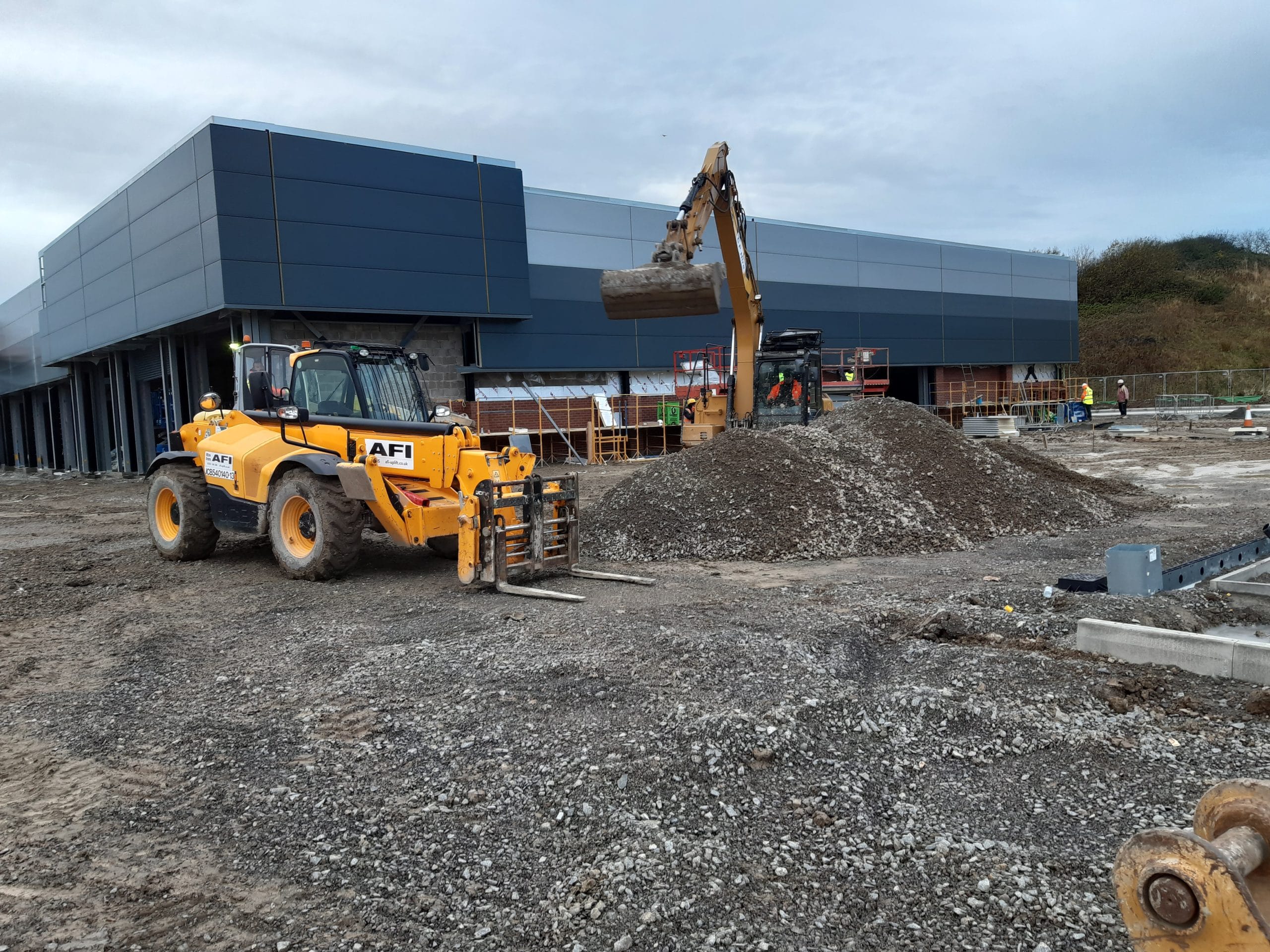
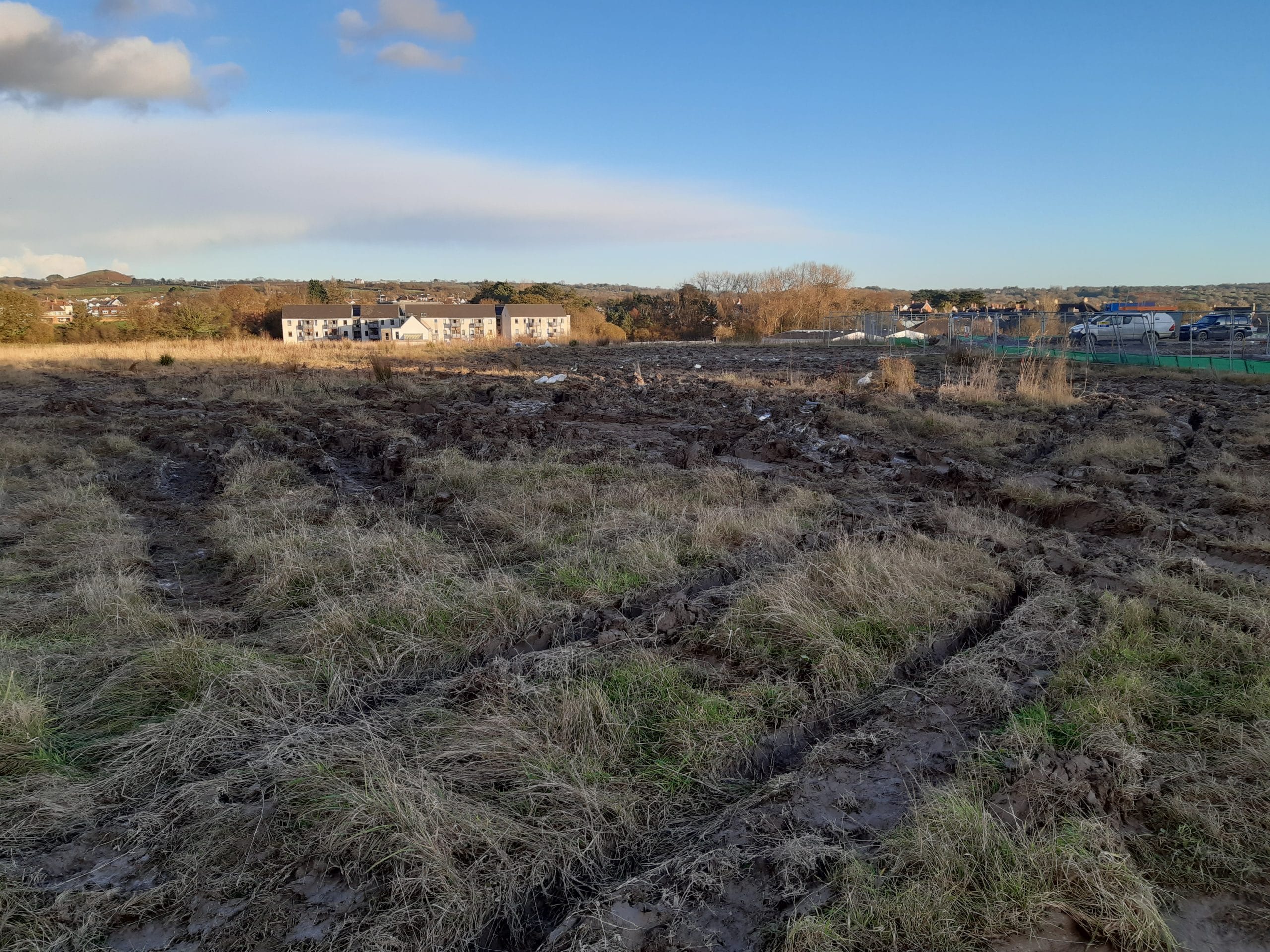

Fairhurst were appointed to undertake a Phase 2 Ground Investigation to support the proposed redevelopment of a site in Cardigan, where plans were brought forward for a new commercial unit with associated external areas.
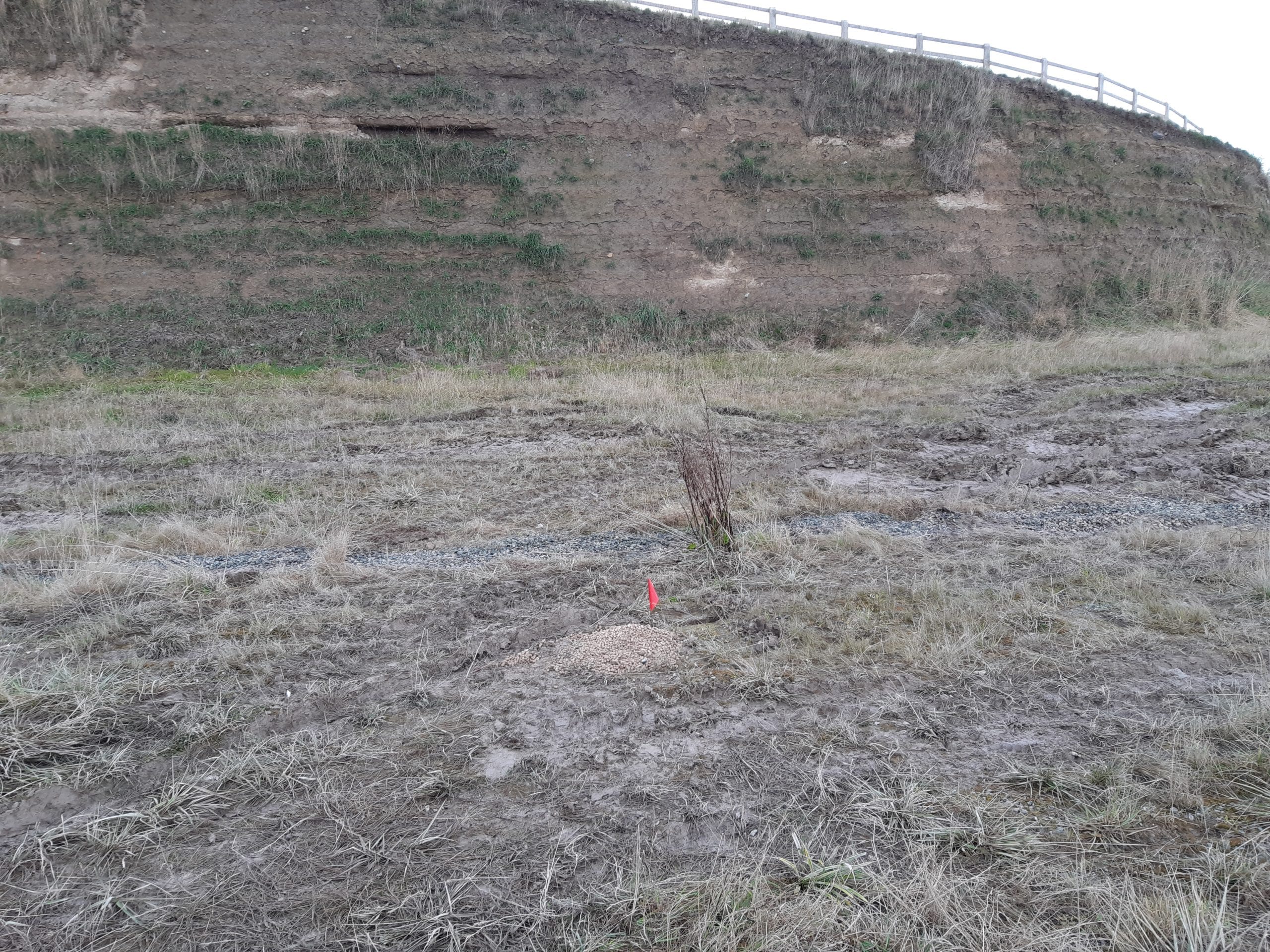
The works were built upon earlier desk-based assessments and were designed to develop a detailed understanding of both ground conditions and geotechnical constraints, including slope stability considerations along the site boundaries associated with historic earthworks.
Site Investigation Works
The investigation programme included:
- Cable percussion boreholes to assess deep subsurface conditions
- Machine-excavated trial pits for near-surface inspection
- Soil sampling and laboratory testing
- In-situ testing to determine strength parameters
- Infiltration testing to assess drainage feasibility
Ground Conditions
The investigation identified the following:
- A ~0.5 m thick engineered layer/ working platform present across the site
- Mixed granular and cohesive made ground beneath associated with historical works
- Underlying Glacial Till deposits extending to bedrock >12 m bgl
- Firm to stiff cohesive soils with moderate to high strength
- No significant contamination identified through chemical testing
In addition, the site is bounded by engineered slopes to the west and north-west, where evidence of historical movement, drainage issues and localised instability was identified. These features, together with the presence of historic earthworks, were recognised as key geotechnical constraints.
Key Findings and Outcome
While near-surface materials were not considered suitable for direct foundation support, the underlying Glacial Till provided a competent bearing strata.
However, due to uncertainty associated with historic earthworks and slope stability risks, a piled foundation solution was progressed to provide greater confidence in long-term performance and to mitigate potential variability in ground conditions.
The investigation provided a clear understanding of ground conditions and site constraints, enabling the project to progress with reduced geotechnical risk and increased design confidence.